Drone Rules in DFW and Austin: What FAA Part 107 Means When You Hire a Pilot
You've booked the photographer, the venue or the listing date. Then someone asks: "Is the drone pilot legal to fly here?" It's a fair question, and in Dallas-Fort Worth and Austin, with major airports, busy stadiums and fast-growing suburbs, the answer depends on more than owning a drone.
This guide explains what FAA Part 107 means for you as a client, so you can ask the right questions and avoid last-minute surprises.
This article is general information, not legal advice. Rules change, so always confirm current requirements with the FAA.
What Part 107 is, in plain English
Part 107 is the section of federal aviation regulations that covers most commercial operations of small drones in the United States. If a flight is for a business purpose, such as photographing a listing, filming a wedding or inspecting a roof, it falls under Part 107.
The remote pilot certificate
To fly commercially, the remote pilot in command must hold an FAA Part 107 remote pilot certificate. Earning it requires passing an FAA aeronautical knowledge test covering airspace, weather, regulations, emergency procedures and more. Certified pilots must also complete recurrent training every 24 calendar months to stay current.
Drone registration and Remote ID
Drones flown under Part 107 must be registered with the FAA and marked with their registration number. Most must also broadcast Remote ID, a kind of digital license plate that shares identification and location information during flight.
The core operating rules
Part 107 sets out baseline limits. Some can be waived by the FAA for specific operations, but these are the defaults.
- Visual line of sight. The pilot, or a visual observer working with them, must be able to see the drone with their own eyes throughout the flight.
- Altitude. Generally no higher than 400 feet above ground level, or higher if staying within 400 feet of a structure and no more than 400 feet above its top.
- Speed. No faster than 100 miles per hour, which is far beyond what client work requires.
- Yielding. Drones must always give way to crewed aircraft.
- Preflight checks. The pilot must ensure the drone is in a condition for safe operation before every flight.
- Weather. Minimum visibility and cloud clearance requirements apply.
Airspace: the big deal in DFW and Austin
Airspace is where local geography matters most.
Controlled airspace around major airports
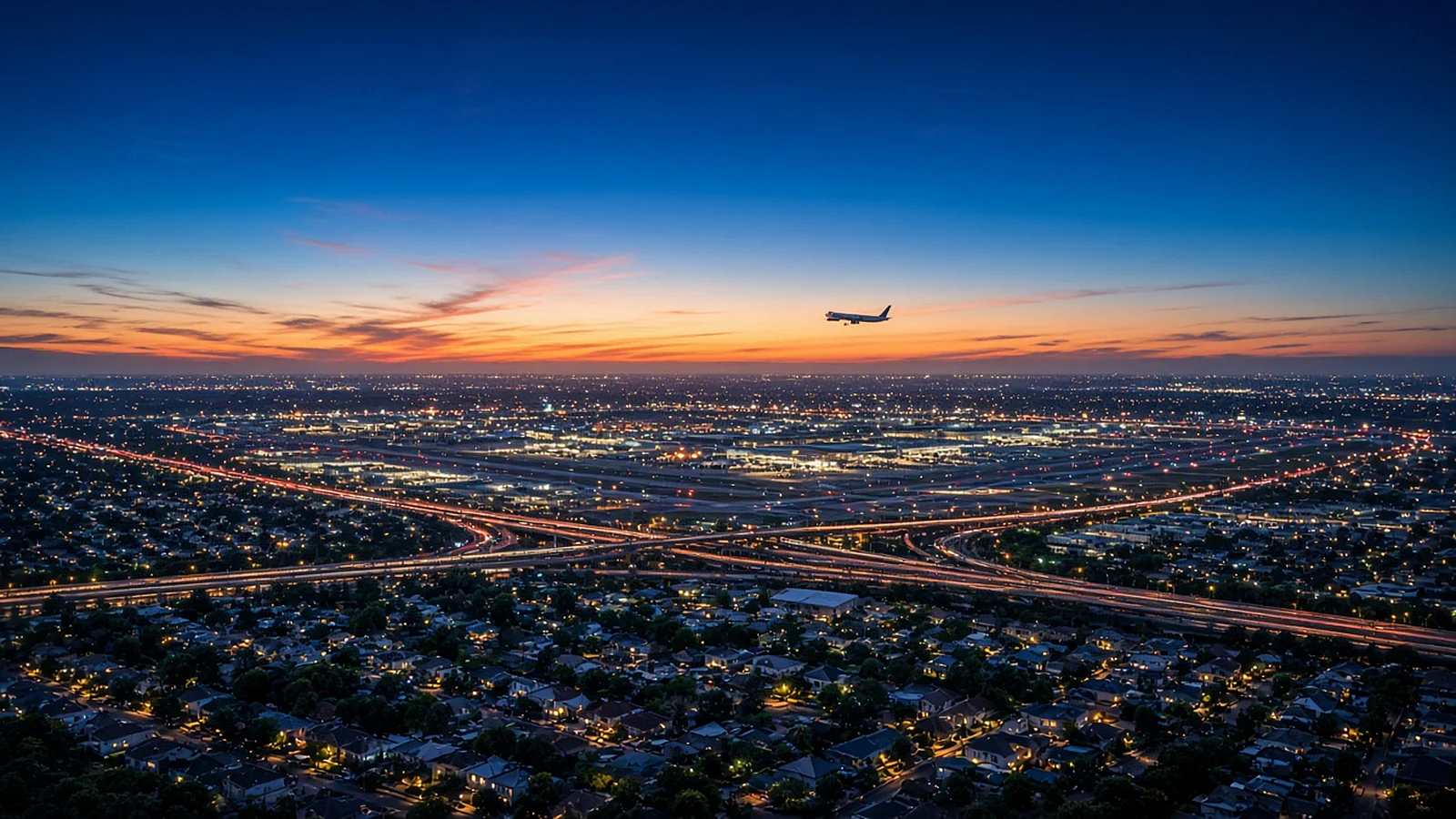
A large area around DFW International and Dallas Love Field is controlled airspace, as is the area around Austin-Bergstrom. Smaller towered airports across both metros, such as Addison and Fort Worth Meacham, have controlled airspace of their own.
Flying in controlled airspace requires FAA authorization. That covers many neighborhoods in Irving, Grapevine, Coppell, Euless, North Dallas and parts of southeast Austin, among others.
How LAANC helps
LAANC, the Low Altitude Authorization and Notification Capability, lets certified pilots request authorization near many airports through approved apps. When a request fits the pre-approved altitude for that location, approval can come quickly. When it doesn't, the pilot can apply through the FAA's DroneZone, which takes longer.
The lesson for clients: a professional pilot checks airspace when you book, not the morning of the shoot.
Temporary flight restrictions
Temporary flight restrictions, or TFRs, can appear around major sporting events, VIP movements, emergencies and other special situations. In North Texas, big events in Arlington are a familiar example; in Austin, game days and large festivals can bring restrictions too. Pilots check for TFRs before every flight.
Flying near people and at night
Over people
Part 107 limits flying over people who aren't directly participating in the operation, unless the drone and operation meet specific requirements set out in the rules. This matters at weddings, festivals and corporate events. A professional pilot plans routes that avoid passing over guests and crowds.
At night
Night flights are allowed when the remote pilot has completed the required updated training or testing, and the drone is equipped with anti-collision lighting visible for at least three statute miles. That makes twilight real estate shots, sparkler exits and evening events possible when planned properly.
State and local considerations in Texas
Federal rules govern the airspace, but they aren't the only rules that matter.
- Texas law. Texas has its own drone statutes, including provisions on imaging private property and restrictions near certain critical infrastructure.
- Parks and public land. Many city, county and state parks restrict drone takeoffs and landings.
- Venues and HOAs. Private property owners, venues and some communities set their own policies about where drones can launch.
- Privacy and courtesy. Good pilots avoid lingering over neighbors' yards and let people know when a drone will be overhead.
What this means for your shoot
Here's a quick checklist to use when hiring:
- Ask whether the pilot holds a current FAA Part 107 remote pilot certificate.
- Share the exact address so they can check airspace early.
- Ask how they handle authorization if the site is in controlled airspace.
- Confirm whether evening or night flying is part of the plan.
- Ask whether the venue, park or property owner has approved the flight.
- Ask about insurance. The FAA doesn't require it for Part 107, but many venues and businesses do.
For a broader checklist, see our guide on how to hire a drone pilot in DFW or Austin.
The short version
Every Stoop 360 flight is flown by an FAA Part 107 certified remote pilot. For you, that means the flight is planned around airspace, safety and the rules before it ever leaves the ground, so the only thing you have to think about on the day is the view.
Frequently Asked Questions
What is FAA Part 107?
Part 107 is the section of federal regulations that governs most commercial operations of small drones in the United States. It covers pilot certification, operating limits and airspace rules.
Does my drone pilot need a Part 107 certificate?
If the flight is for business or any commercial purpose, including real estate, weddings and events, the remote pilot in command needs an FAA Part 107 remote pilot certificate.
What is LAANC?
LAANC stands for Low Altitude Authorization and Notification Capability. It's an FAA system that lets certified pilots request authorization to fly in controlled airspace near many airports, often receiving a response quickly when the request fits pre-approved altitudes.
Can drones fly at night under Part 107?
Yes, when the remote pilot has completed the required updated training or testing and the drone has anti-collision lighting visible for at least three statute miles.
Do I need permission to fly a drone over my own property in Texas?
Owning the land doesn't change federal airspace rules. Commercial flights still require a certified pilot and, in controlled airspace, FAA authorization. Texas also has its own drone laws worth reviewing.
Images in this article are illustrative and do not depict specific Stoop 360 projects.
Keep reading
How to Hire a Drone Pilot in Dallas-Fort Worth or Austin: 10 Questions to Ask
Certification, airspace, insurance, portfolio and plan B. Ten questions that separate a professional drone pilot from someone who just owns a drone.
Read article
Drone Videography for Events: How to Plan Aerial Coverage That Actually Works
Galas, festivals, product launches and private celebrations. A planner's guide to aerial coverage that captures scale without getting in the way.
Read article
After the Storm: How Drone Roof and Property Inspections Work in North and Central Texas
Hail, wind and summer heat take a toll on Texas roofs. Here's how a drone documents damage safely, what it can't replace, and how to get useful images.
Read article